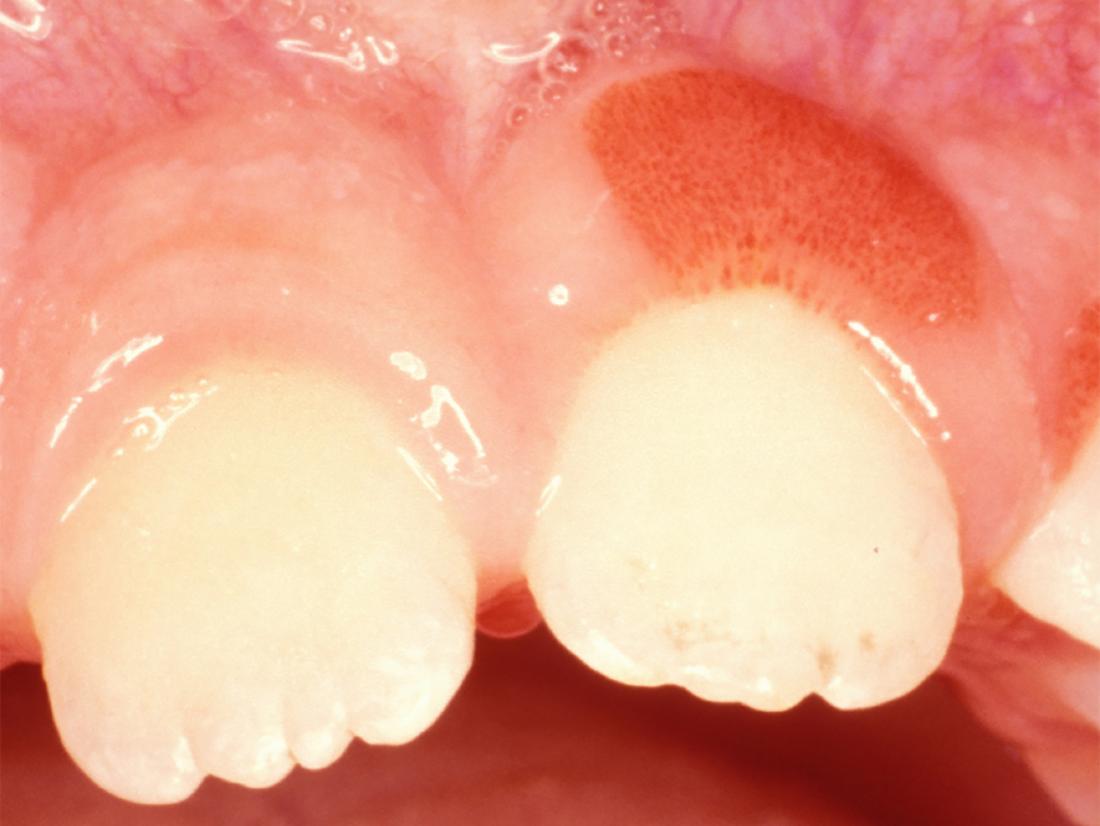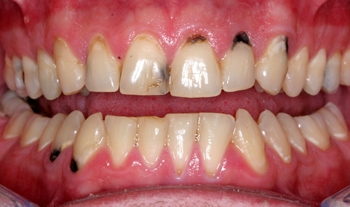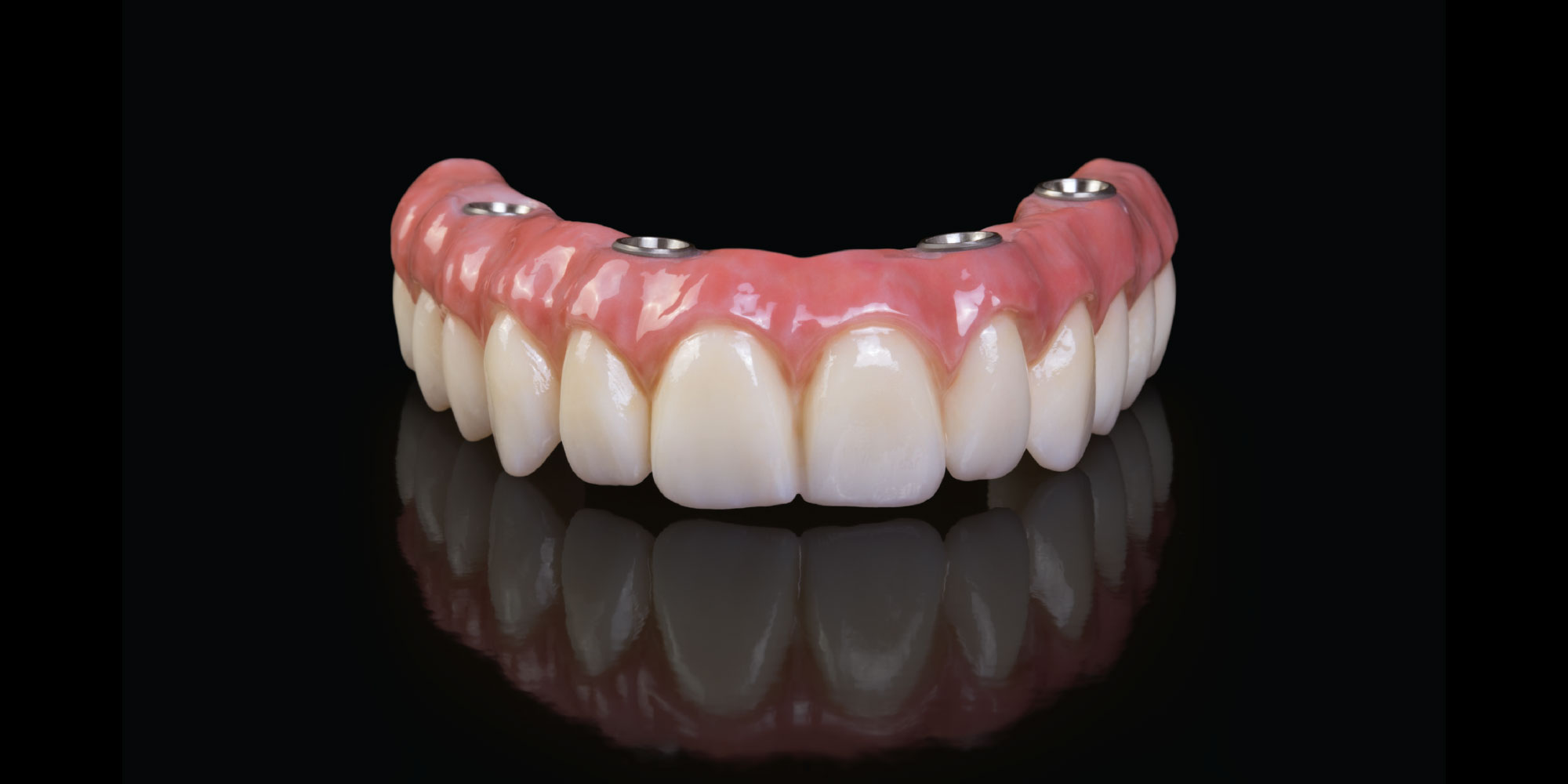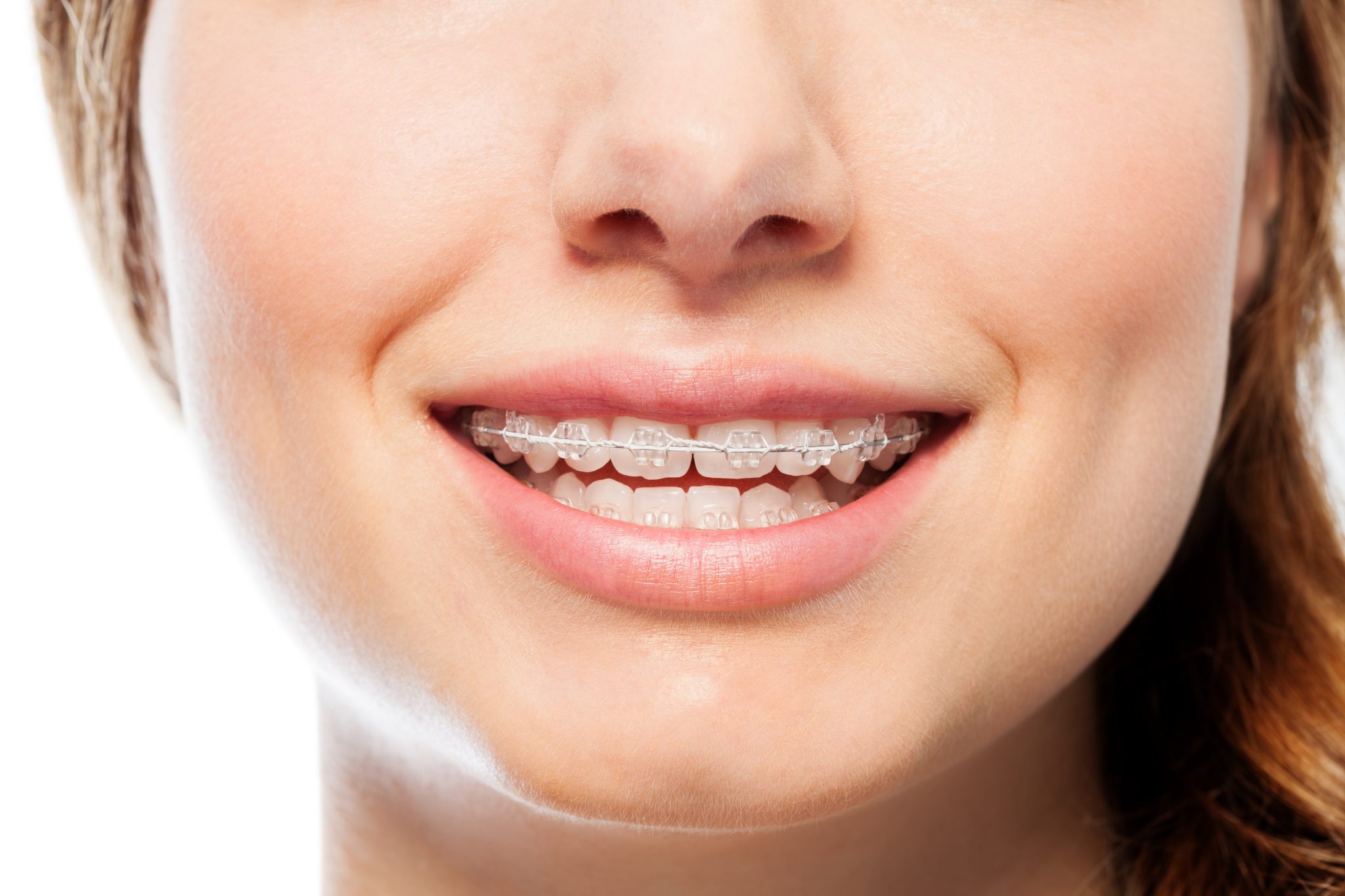
Smile makeover before and after. Actual patient of Dr. Dulay & Associates in Tamarac, published with consent. Individual results vary.
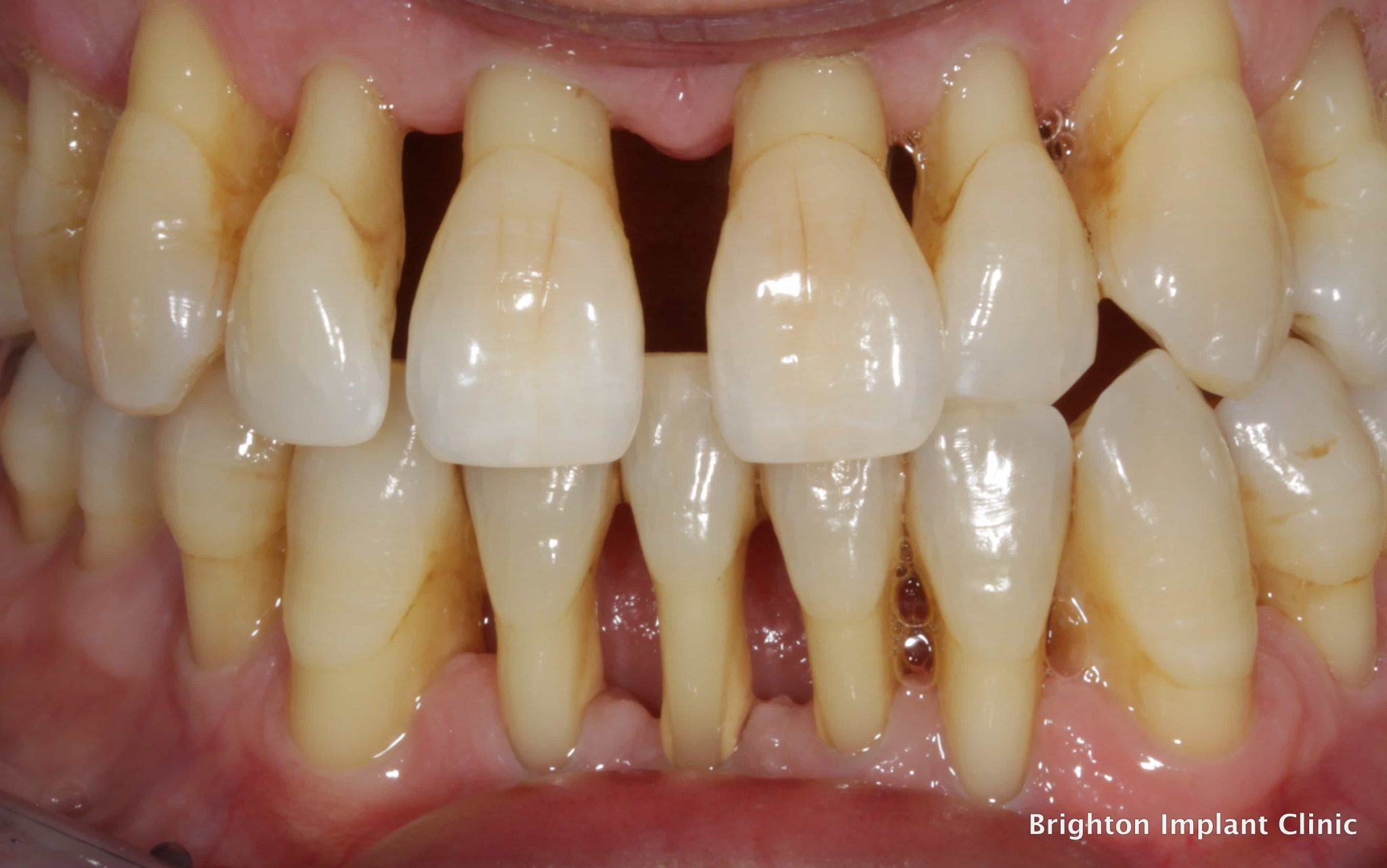
Look at the upper photo and count how much upper tooth you can actually see. A narrow strip. The lower teeth are doing most of the work in that smile, and they are not supposed to be.
Most people who come to me about a smile makeover arrive with a version of that complaint. The smile looks tired. The top teeth look short and flat — shorter than they used to be, and short enough that in photographs the upper teeth barely register while the bottom ones show more than they should. The edge of the smile runs straight across instead of curving. Whitening didn’t fix it. It made the teeth brighter and just as short.
And so the question I get asked is almost always the same one: how many veneers do I need?
That is the wrong first question, and answering it directly is how cosmetic cases fail.
A smile makeover is a sequence, not a product
“Veneers” is a material. A smile makeover is a plan — a specific order of steps that ends in veneers, where each step exists because the one after it will not work without it.
The reason this matters commercially, not just clinically: veneers bonded onto teeth in the wrong position, at the wrong shade, against the wrong gum line, in a bite that is still destructive, produce exactly the result everyone is afraid of. Bulky. Too white. Too flat. Chipped within a few years. That outcome is almost never the fault of the porcelain. It is the fault of the sequence, or the absence of one.
The case above is a good illustration, because on the surface it looked like a veneer case and underneath it was not one yet.
What was actually wrong
That retracted photograph is the diagnosis, and it is worth reading closely. The upper and lower front teeth meet tip to tip. There is essentially no vertical overlap. The upper incisal edges are flat and straight across, and grey and glassy where the enamel has thinned enough for the dentin underneath to show through. The lower incisors are worn in exactly the same way, because wear is a two-sided event. The gum line is uneven, sitting at different heights on teeth that should be symmetrical.
Three problems, stacked:
An edge-to-edge bite. Front teeth are built to shear past each other, not to hammer into each other. Meeting edge to edge, they grind themselves flat — a little more every year, and faster as they get shorter, because a shorter tooth meets its opponent harder.
A flattened smile line. A smile that reads as young follows the curve of the lower lip: longest at the two central incisors, sweeping up toward the corners. Because the centrals take the brunt of edge-to-edge contact, they wear fastest. The curve flattens, then eventually inverts into what is often called a reverse smile line. This case had not fully inverted yet. It was flat, which is the step before.
Lost lip support. The upper front teeth hold the upper lip out. Take length and thickness off them and the lip has less to rest against — it settles in, covers more of what is left, and the amount of tooth visible in conversation shrinks further.
Placing four veneers on that, and nothing else, would have looked better for a while and then broken. The bite that flattened natural enamel finds porcelain too. Porcelain is harder than enamel; it is not smarter than it.
The sequence I used
1. Orthodontic alignment first.
Before anything cosmetic, the front teeth had to be moved into a position where the uppers could overlap the lowers again, and where I would have room to add length back without immediately crashing into the opposing teeth. This is also the step that keeps a case conservative: teeth in the right position need less reduction than teeth being disguised in the wrong one. Short-course clear aligner treatment ahead of veneers is one of the most underused moves in cosmetic dentistry, and a limited case aimed at one specific problem is a very different proposition from the full-arch orthodontics most people picture.
2. Whitening.
Always before restorative work, never after — porcelain and composite do not respond to bleach. Whitening sets the shade that everything else is then matched to, so the natural teeth and the new work stay in agreement instead of drifting apart.
3. Gum recontouring.
Wear had shortened the teeth from the bottom while the gum line stayed where it was, leaving teeth that were both short and disproportionate, with zeniths at uneven heights. Recontouring re-established those high points so that length added at the edge produced a correctly proportioned tooth instead of a long one. Skipping this is why some veneer cases look like teeth that are simply too big.
4. Four porcelain veneers, finished with composite veneers.
Porcelain where the demand for strength, translucency and long-term stability was highest. Direct composite on the supporting teeth, blended into the porcelain. Mixing materials is a deliberate choice, not a budget compromise: it puts the strongest material exactly where the load is and keeps the rest of the case more conservative and more repairable.
The oblique view shows the part most before-and-afters miss. The change is not just whiter teeth. It is upper tooth display — how much smile there is when the person is simply talking — and it is the fullness through the corner of the arch, where the before photo goes dark and the after does not. That comes from restored length and corrected position, and it is the difference between a result that looks like dentistry and a result that looks like a face.
Why some veneers look fake — and how the sequence prevents it
Nearly every “obvious veneer” result traces back to a step that was skipped:
- Skipped alignment → teeth had to be over-prepared or over-built to fake a position, so they come out bulky and flat across the front
- Skipped whitening → new restorations matched to dark natural teeth, or bright restorations sitting next to dark ones
- Skipped gum work → correct-length teeth that read as square and oversized because the gum line never moved
- No bite analysis → a flat, uniform edge with no individual character, built to survive rather than built to look right
- One shade, no translucency → the single most recognizable tell, and purely a laboratory-communication problem
None of those are porcelain’s fault. You can see more finished cases in the smile gallery, and the porcelain veneers page covers materials and longevity in more detail.
What the evaluation involves
I do not plan a smile makeover from a selfie, and neither should anyone else. A real workup means measuring how much tooth structure has been lost against what should be there, checking how the teeth meet in centric and in excursions, reading the wear facets to determine whether the pattern comes from function, from clenching and grinding, or from acid erosion, evaluating the muscles and joints, taking full photographic records, and simulating the intended result before a single tooth is touched. That simulation is what tells me whether the length I want to add will survive the bite the patient actually has — and whether alignment, or in some cases a full mouth rehabilitation, needs to come first. A case planned backwards from the finished smile is a case that gets built once.
Is a smile makeover the right conversation for you?
Read this as a prompt to be evaluated, not a diagnosis:
- Your upper front teeth look shorter than they do in older photographs
- The bottom edges are flat and straight rather than gently curved
- The edges look grey, glassy or translucent in bright light
- Your top and bottom front teeth meet tip to tip when you bite together
- Very little upper tooth shows when you talk; more lower tooth shows than you would expect
- The middle of your smile sits level with, or lower than, the corners
- Whitening helped the color and changed nothing about the shape
- You have been quoted “just veneers” somewhere and it did not sit right with you
- You have chipped a front tooth on something unremarkable
- You catch yourself smiling with your lips closed in photographs
Two or three together is a pattern, not a coincidence.
Honest limits
Not every worn smile is a candidate for what is described here.
Alignment first adds months to the front end of a case. Some people do not want that. The honest answer is that skipping it means accepting either a more aggressive preparation or a result more likely to fail — and I would rather say that at the consultation than after the porcelain is bonded.
Severe wear that has closed the bite significantly is a larger problem than this case. It generally means rebuilding both arches rather than veneering the front six, and it belongs in the full mouth rehabilitation conversation.
Active gum disease, untreated decay, or a tooth needing root canal or surgical care is handled before any cosmetic work. Cosmetic dentistry placed over unresolved disease is a temporary result at a permanent price. Where a case genuinely requires oral surgery, orthognathic correction, or specialist care, restorative dentistry is not a substitute and I will refer.
Grinding and clenching do not stop because the teeth were restored. Protection — usually a night guard — is part of the plan, not an upsell after it.
Individual results vary. The result shown reflects one patient’s anatomy, bite and healing. It is not a prediction of any other outcome, and not every case is a candidate.
Start with a diagnosis, not a quote
If your front teeth are getting shorter, the window for a conservative result is closing a little every year. There was enough tooth left in this case to work with. That is not true forever.
Find out which category you are in — cosmetic or structural — before you spend money on the wrong one. I am a fee-for-service cosmetic dentistry practice in Tamarac and I have been doing this work in Broward County since 2004. The first conversation costs nothing.